One keep, then questions
When
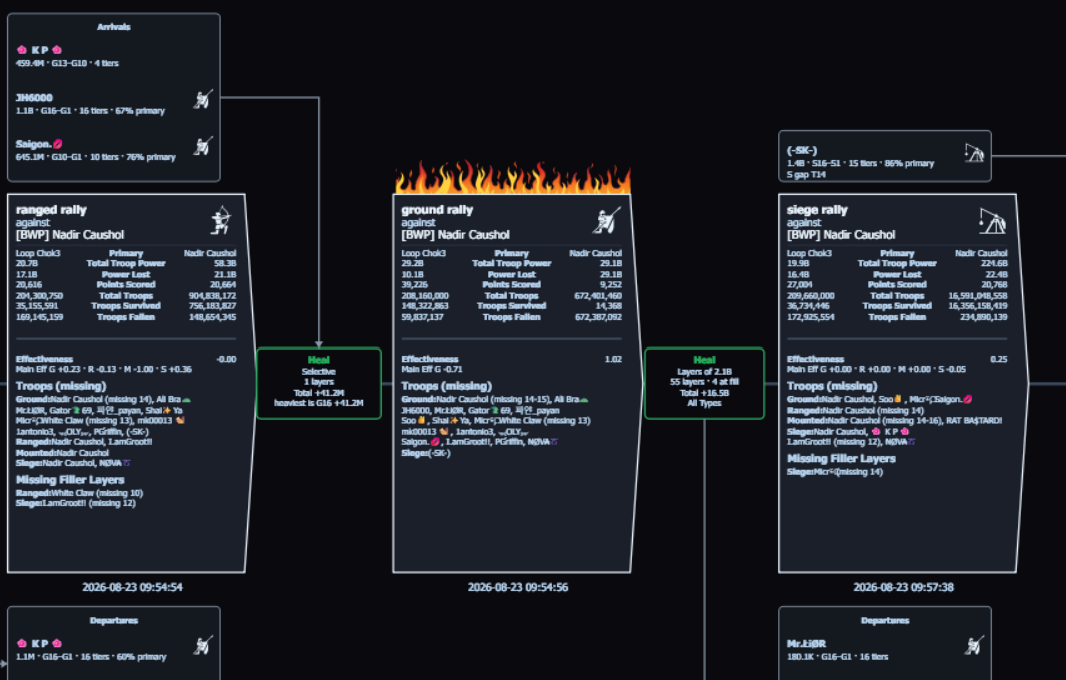
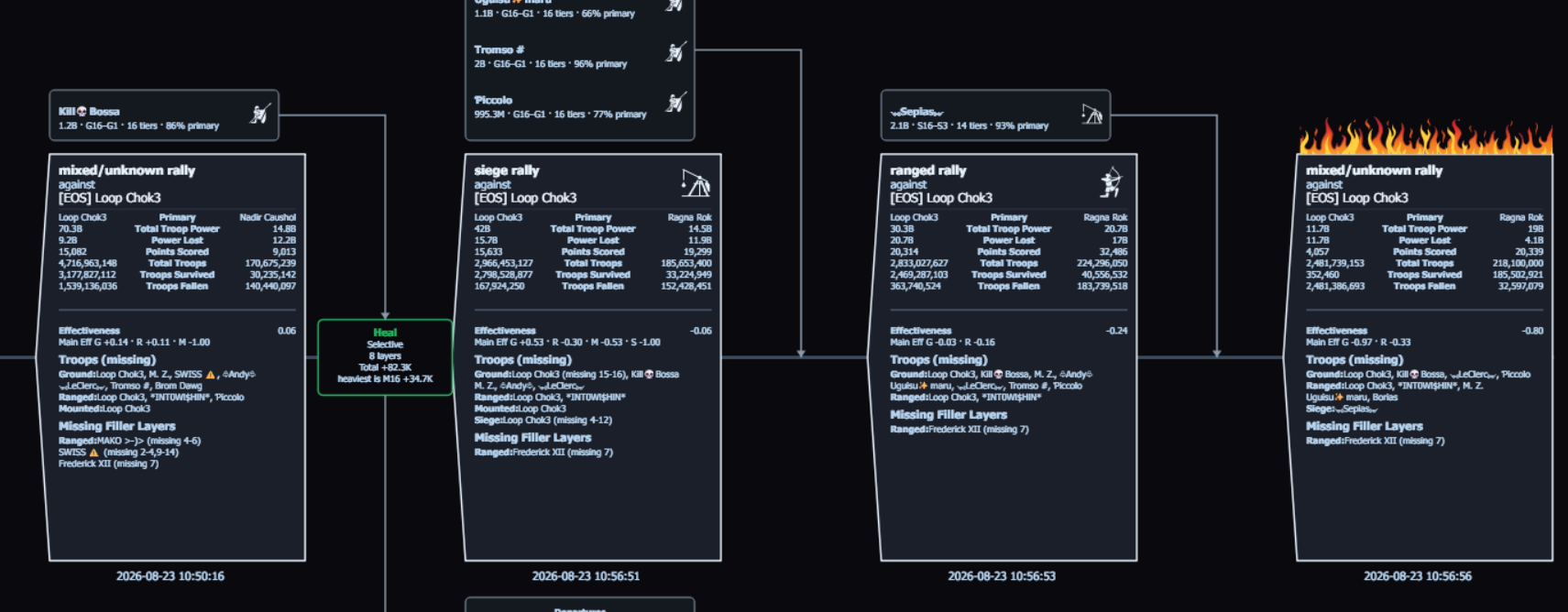
The first summary (or you) named a keep that ate a long sequence — an enemy you tore at, or incoming attacks on a teammate's city. Those are two different subsets.
Focus
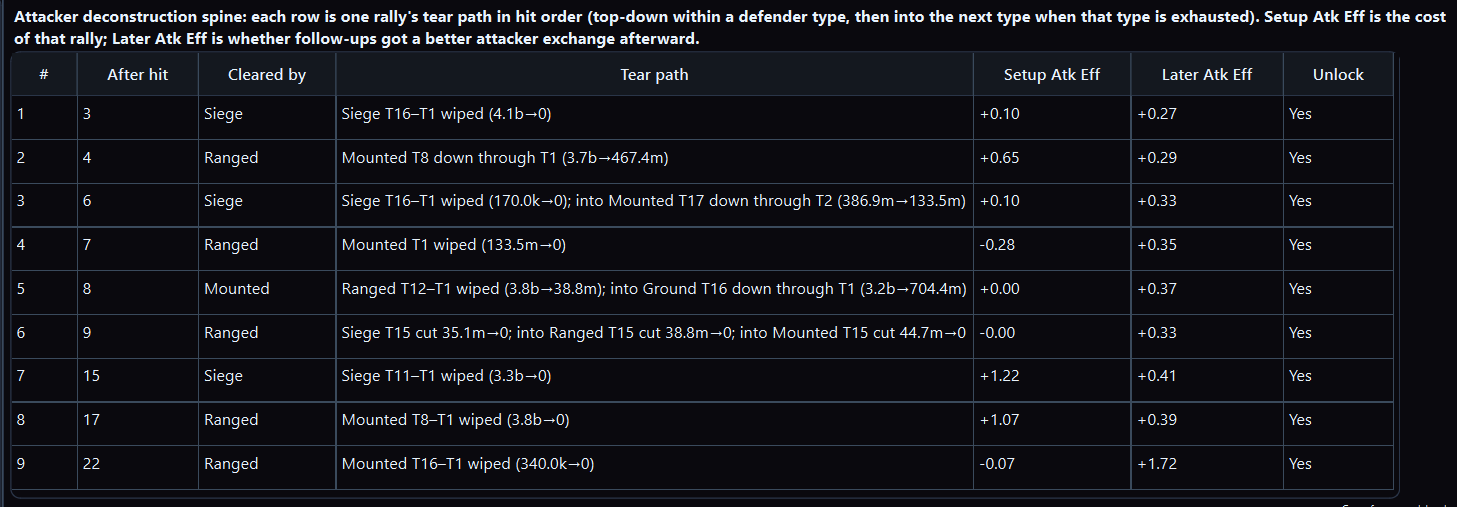
- Attacker story: hits on that enemy keep.
- Defender story: hits on that teammate’s city.
Do not treat one city as both stories without a deliberate vantage switch. Attacker and defender look at the same battles from different vantages; a different teammate’s city is a different focus.
What you may get on the way in
A sequence: hits in order, heals and movement in the gaps; on a teammate’s city, rein swaps and missing layers after depletion. Some slices get richer reporting like this. Use it, then keep asking.
Questions that are yours (the point of this recipe)
Still on that keep:
- “Which hits went negative but stripped something the later rallies needed?”
- “Was another siege wave justified from what was left?”
- “Which of our joiners were already dusty by the late ranged?”
- “Table of attacker Effectiveness across the sequence.”
- “On the teammate city: which reins left and came back thinner?”
Common miss
Stopping at “nice timeline” and leaving Tactica to narrate the picture in another tool. The timeline is the map of this subset. Step 4 is still available.
The other miss: asking for “the keep sequence” without which keep and which vantage.
Import the battlefield. Ask for the keep that mattered.
These landings only exist after the reports are in Tactica. Fast Read puts them there in minutes.
New customers can start with a 7-day trial. Plans start at $14.99/month with full feature access.