Ugly-result forensics
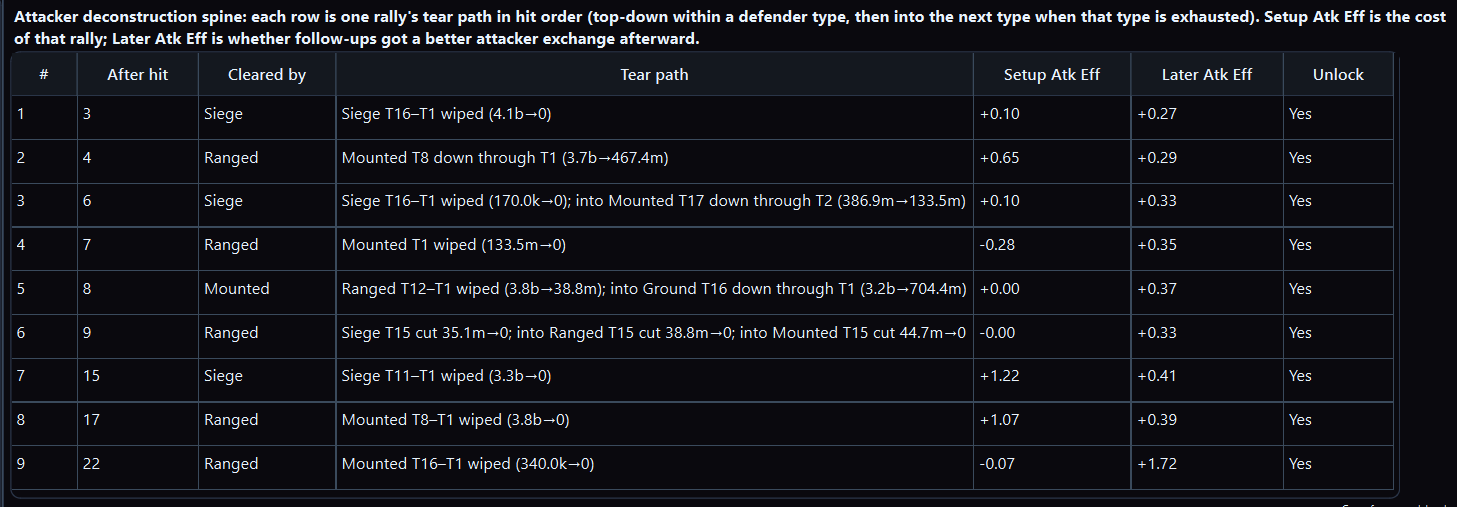
Every after-action has one fight people will not shut up about — an ugly result amidst a sequence of battles. The useful move is not to reopen that report in the game and brood. It is to know whether the number is stake (a huge march that was always going to move the scoreboard), a bad trade, a missing layer or missing rein, or an attack composition that no longer matched what was left on the defending city.
By hand you need that report’s full layers and the fights around it (same keep, same type) so you know if it was a one-off. That is two jobs. People do the first and skip the second.
Focus
Get to a slice that contains that result (the keep, the player’s rallies of that type, “attacks that went negative”). Then point at it: the worst exchange, the breach, the rally everyone remembers.
Why this used to be impossible by hand
A single opening screenshot cannot tell stake from trade. A single full report still cannot tell you it was the third identical attack into a city that had already healed.
Questions (any wording)
This result
- Why did this one go so negative?
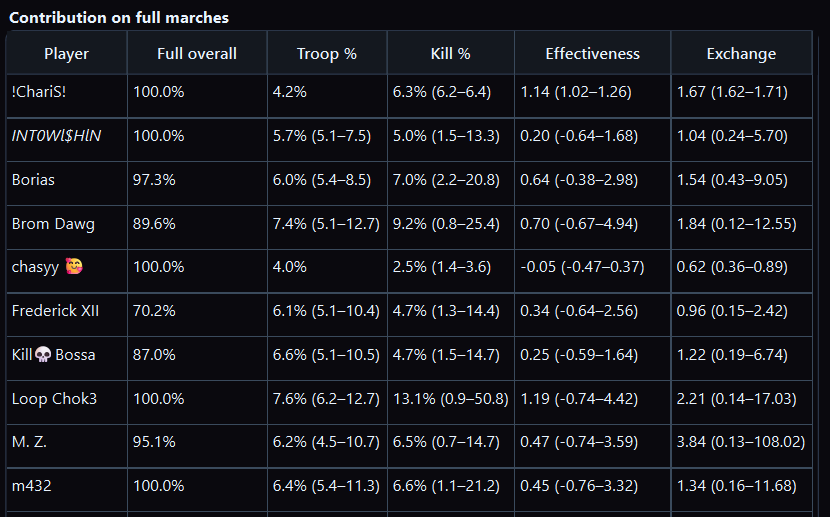
- Is this ugly because we put a large volume of points at risk, or because we traded badly?
- What was missing on our side — a layer, a rein, a type?
- What was actually on their wall when we landed?
This result in its sequence
- Was this the same rally we had already sent twice?
- Did an earlier hit already do the thing this hit was for?
- Who was dusty on this join vs earlier in the night?
- What happened immediately before this collapse — the prior hit, a heal, reins leaving?
After you know
- Show the other ugly results in this slice — do they share a target, a type, or a missing person?
- Which other fights in this pile share that pattern?
What a good answer looks like
A named measure (points given up, Effectiveness, exchange). Stake vs bad trade vs missing piece called as a reading, not as another total. Neighbors in time if you asked for the sequence. No character study of the setter. Numbers, and the reading.
Common miss
Starting forensic work on the whole battlefield (“why did we play bad”). Name the ugly result — or the cut of ugly results — first. Pair with one keep when it sits in a tear-down sequence.
Stake, bad trade, or missing piece — with neighbors in time.
One opening screenshot cannot tell those apart. Import the battlefield, get to the keep or rally-type pile that contains the fight everyone remembers, then ask whether it was a large volume of points at risk, a bad exchange, or a missing layer/rein — with the hits around it still in view.
New customers can start with a 7-day trial. Plans start at $14.99/month with full feature access.