One keep as an experiment
A reading: which hits on that keep actually mattered
A series of hits on one city is the closest thing battlefield data has to a controlled run: same target, ordered time, the wall and the reins changing while your recipe repeats or shifts.
By hand this is the nightmare job: open every report that touched that keep, write down the clock, the attack type, whether they healed, who was inside, what layers were left, then try to see the night as one story. Teams do not do this. They remember the last hit and a couple of callouts.
The Analyst can sit on that keep and answer questions across the whole imported sequence, in minutes.
Focus
Say the keep and the vantage:
- We were tearing down that enemy keep.
- That teammate got hit repeatedly (their city — or a vantage switch onto the defender side of the same keep, if that is what you mean).
You may get a hit-sequence timeline on the way in. That is a map of the experiment. It is not the writeup of every question below.
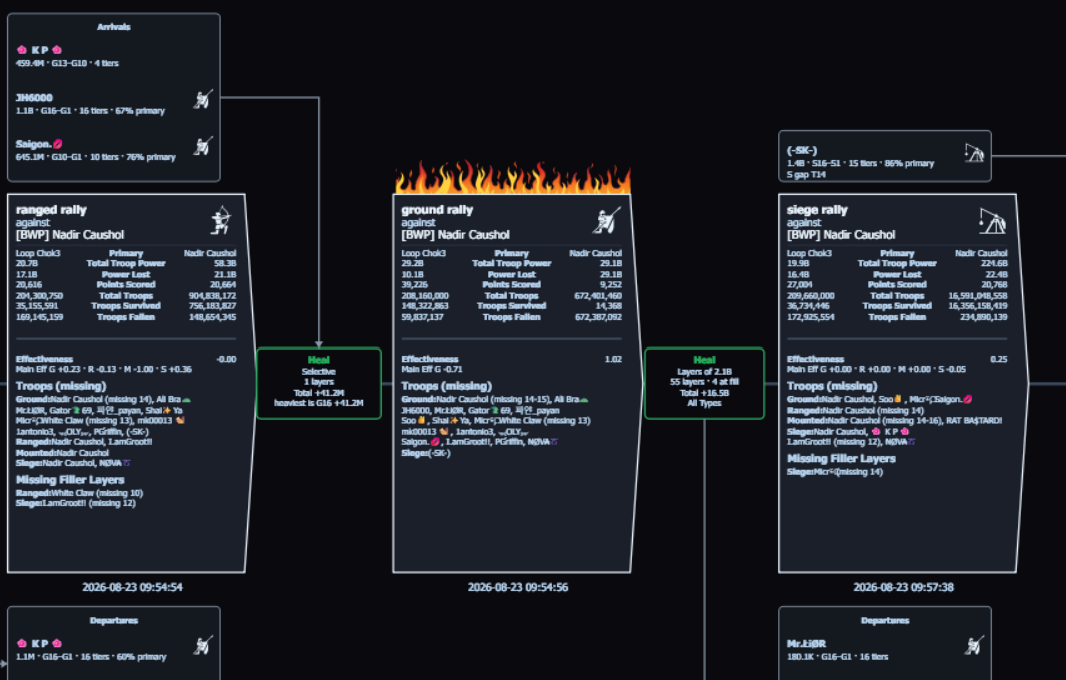
Why this used to be impossible by hand
You cannot hold twelve layer snapshots and six rein swaps in your head. You cannot see whether the third siege wave was the one that made the later ranged “free” without lining the reports up. Opening them one at a time loses the gaps — the heal, the port, the reins that left.
Questions (any wording)
What the sequence was
- Walk every imported hit on that keep, in order.
- What happened between hits — heal, movement, port, reins in or out?
- When did the recipe change (siege → ranged → something else)?
- Treat these separate reports as one sequence on this city — not twelve unrelated fights.
- Are there recurring sequences of attack type on this keep?
What paid
- Which hits went negative on points but stripped a layer the later rallies needed?
- Did early siege do the job even if the scoreboard looked ugly?
- Which later hits were “free” only because something was already gone?
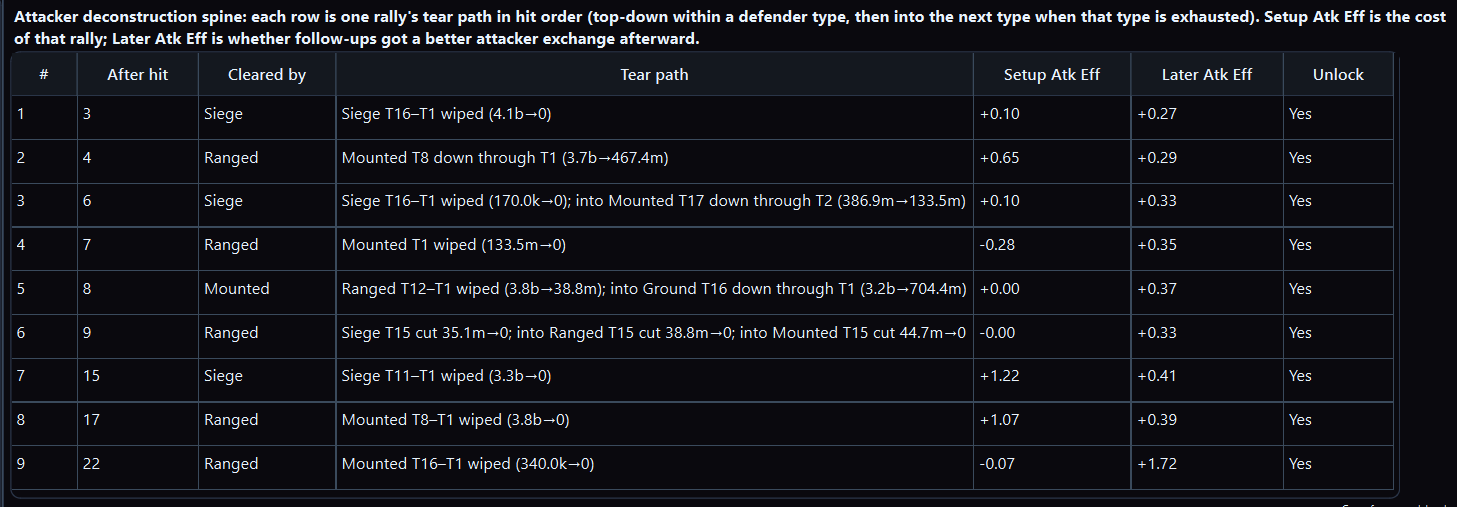
What was wasted
- Did we keep sieging after the thing siege is for was already dead?
- Was the type switch late, early, or about right from the wall you can see in the reports?
- Which waves looked like the same rally into a wall that had already changed?
Defender-side (teammate city)
- When did they get a heal that actually showed up on the main?
- When did the city go empty of a key rein?
- Which incoming type was doing the real damage across the pile, not on the last hit you remember?
What a good answer looks like
Order. Clocks or battle index. A change named in the gap between two hits, not a vibe. Separate “this rally scored points” from “this rally made the next one possible” — that second sentence is a reading, not a sum. Do not treat a missing report in the middle as “nothing happened.” Numbers, and the reading.
Common miss
Asking for “the keep analysis” with no city and no vantage. Or taking the timeline screenshot to another tool to narrate it. Stay on the keep and ask the next question. Near-replicates and rein economics are the usual follow-on families.
The experiment is every hit in order — from reports you imported.
What paid, what was wasted, what changed in the heal/rein gap: that sequence only exists after the mailbox is a library. Fast Read the event, focus the keep (attacker or defender vantage), then ask the questions this page lists — inside Tactica, not in another chatbot.
New customers can start with a 7-day trial. Plans start at $14.99/month with full feature access.