Naming a subset
A subset is the Analyst’s new “here”: the pile of fights you want to think about. You describe it in plain language. The Analyst shifts focus to the reports that match, then summarizes that slice.
You are not filling out a form, and you are not limited to a few official piles. The cuts below can be layered. “Our team’s ranged rally joins where she was a participant” is one subset, not three products.
The Analyst already knows your team. “Our,” “my team,” “us,” and “incoming” are enough to set the side. You do not have to name the alliance.
Core cuts (stack any of these)
Team / side
- Our attacks, our defenses, what hit us
- The other side is implied when you say incoming, or when you name an enemy keep
Attacks or defenses
- Only attacks
- Only defenses
- A player’s night on one of those sides
How the fight was formed
- Rallies only
- Solos only
- Both (say nothing, or say “attacks” without “rally”)
Type of those fights
- All types, or ground / ranged / mounted / siege
- “Our ranged rallies” = our side + attacks + rallies + ranged
- “Incoming siege” on a defense pile = defenses + that incoming type
Who, in which job
Name a person (or several) and the role they were in — or a subset of roles:
| Role | How people say it |
|---|---|
| Solo attacker | her solos; when he hit alone |
| Rally participant | her joins; when he was in the rally |
| Main defender | when she was main; his keeps |
| Reinforcement | when he was only a rein; who reined that city |
“Everything she fought” is wider (both sides, any role). Tighter is usually better.
Layer them
Any combination is legal to try:
- Our defenses, main only, against incoming siege
- Our rallies of one type, only the people you name as joiners
- One teammate as main, plus whoever reined those holds
- Solos of one type in the late window
If two readings are possible, say the extra word. “His ranged” might mean rallies he joined or incoming ranged on his keep. Attacker and defender look at the same battles from different vantages — say which you mean. A different city’s fights are a new focus, not a silent vantage switch.
Other cuts that still work
These are not a second menu. They stack on top of the core cuts.
| Cut | Examples |
|---|---|
| Keep / city / target | hits on that enemy keep; the pile on our setter’s city |
| Time inside the event | first half hour; late window; after the port |
| Target result | holds that cleared; fights where the target was not cleared |
| Quality / custom | attacks that went negative; joins that were already dust; a type missing on our side |
If the Analyst cannot form a custom cut, it should say so or ask. Correct the criteria before you analyze the wrong “here.”
After it lands
Confirm the slice in the post-focus summary: whose fights, which side, which roles, how many battles. Then ask for numbers, comparisons, or a table shape on that pile, or stay vs move. Curiosity map: question atlas.
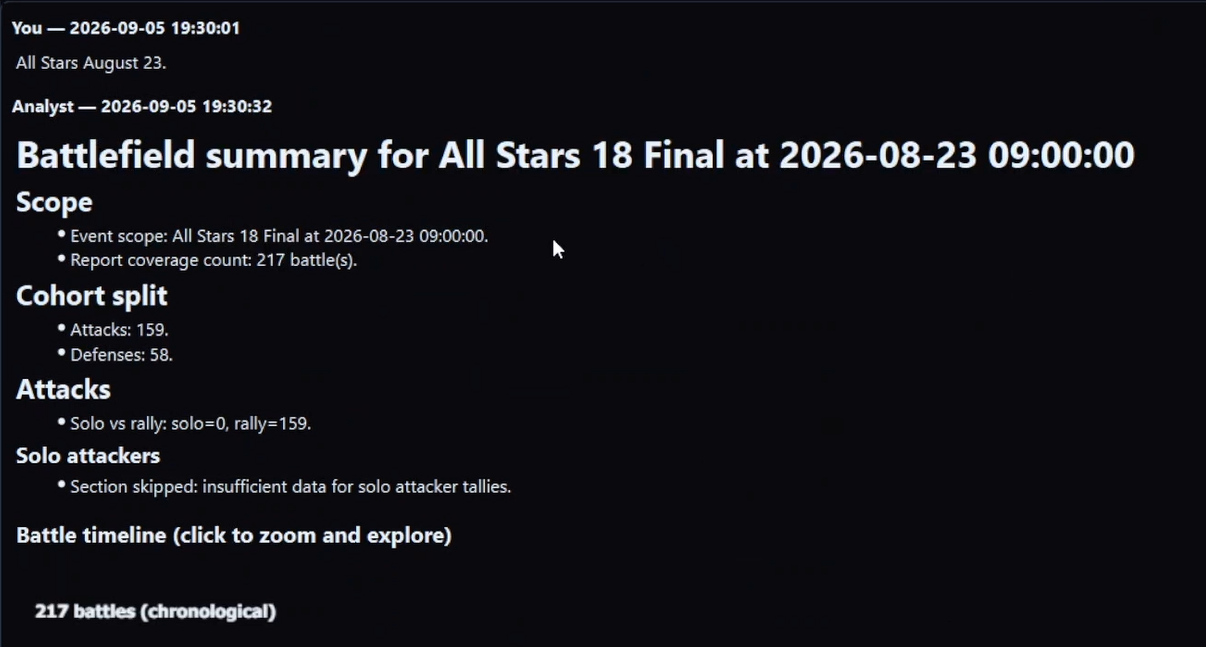
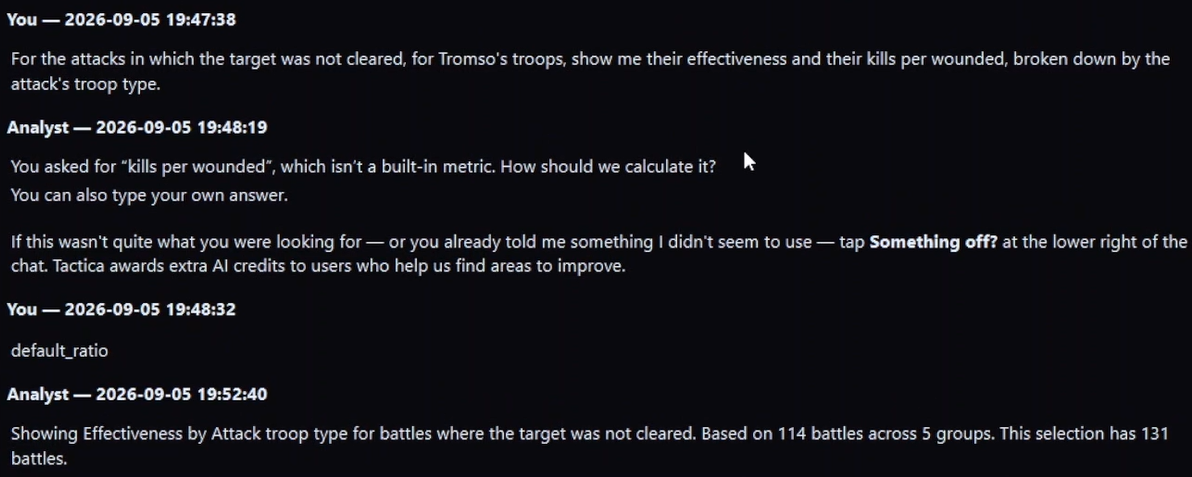
“Our ranged rallies where she joined” only works if those reports exist.
Layered cuts are the point of the product — and they need a structured battlefield underneath. If you are learning how to name subsets before your next event, install Tactica, Fast Read the favorited mailbox, open that battlefield, then practice the stacks above on a real pile.
New customers can start with a 7-day trial. One imported event is enough to stack team, type, role, and keep until the “here” matches what you meant on voice. Plans start at $14.99/month with full feature access.