Kinds of answers (not a menu)
This page names forms the Analyst can come back with. It is not a list of official reports. Any of these can be asked on almost any focus. A few focuses also get a strong default of one form on the way in; that is the short appendix.
Summary
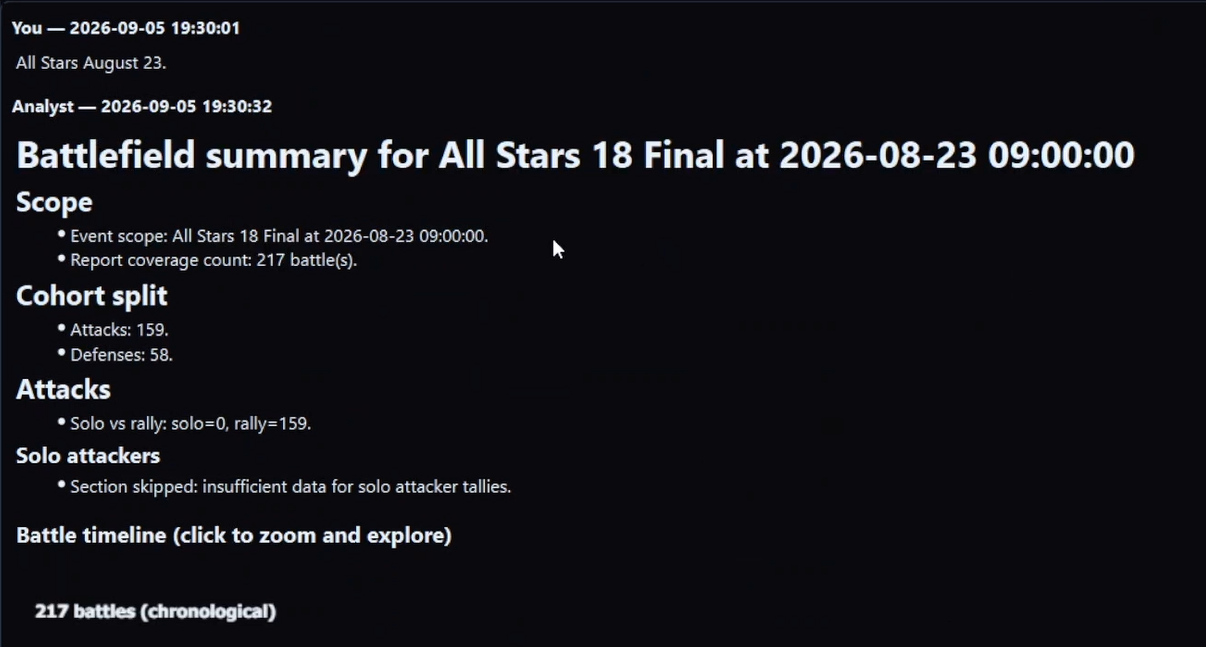
A reading of the current pile: what is in it, what stands out, what is thin — not a dump of every fight. You get this when you select a battlefield and again when you change subset. Use it to aim the next ask. Numbers, and the reading.
Timeline / sequence
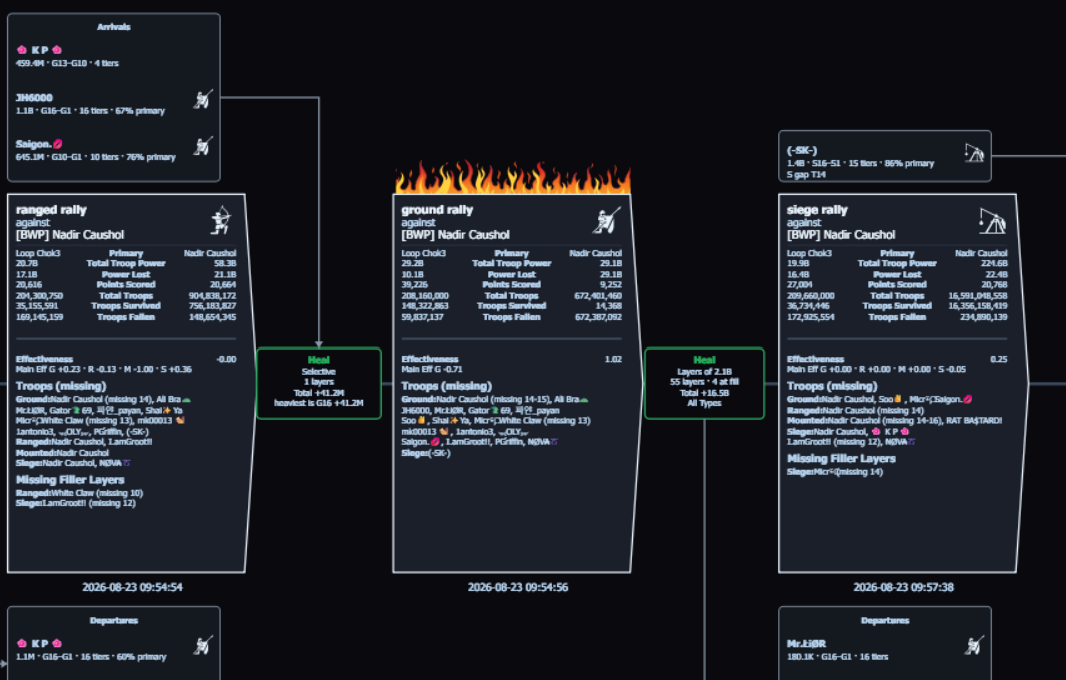
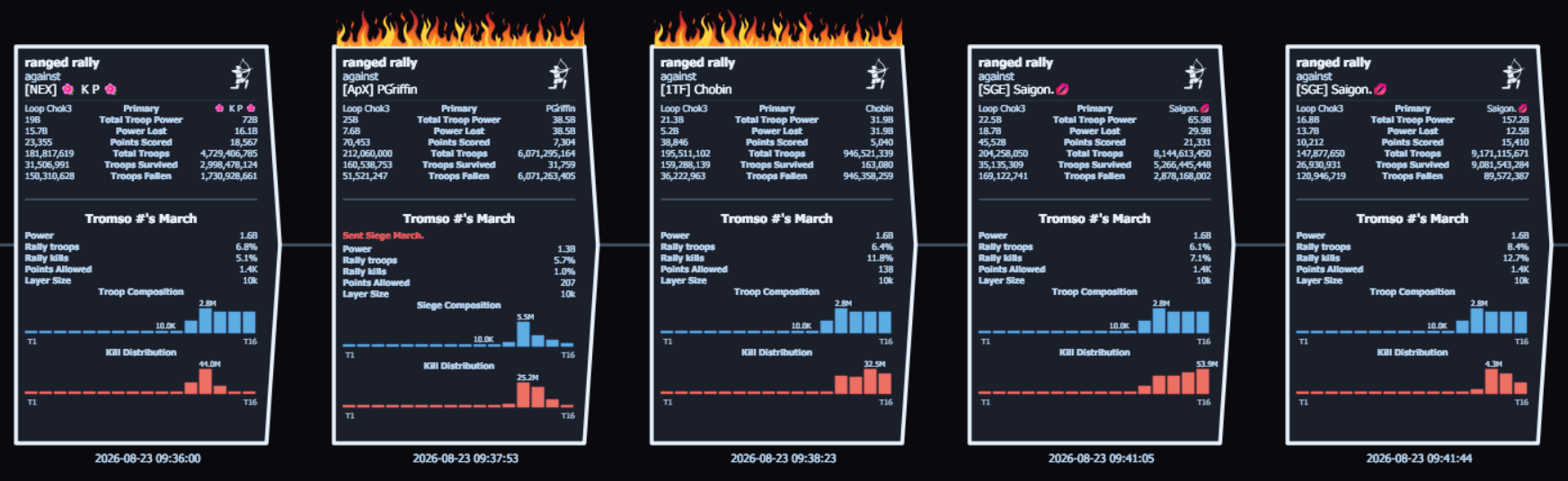
Fights in order, with what changed between them (heals, movement, reins in or out, a port). Natural when the subset is one keep or one player’s incoming, and useful anywhere order matters. A teammate-defense timeline with rein swaps is the same kind of answer as an enemy-keep tear-down — same battle shape, often a different city or a deliberate vantage switch.
Table
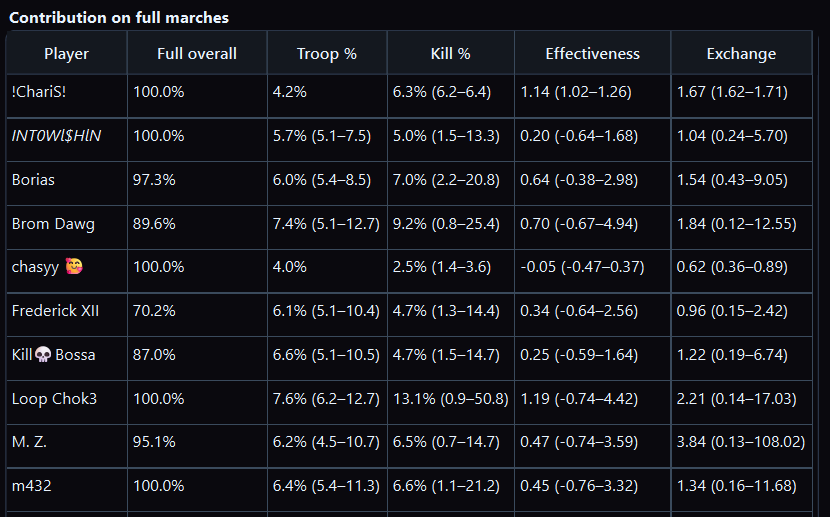
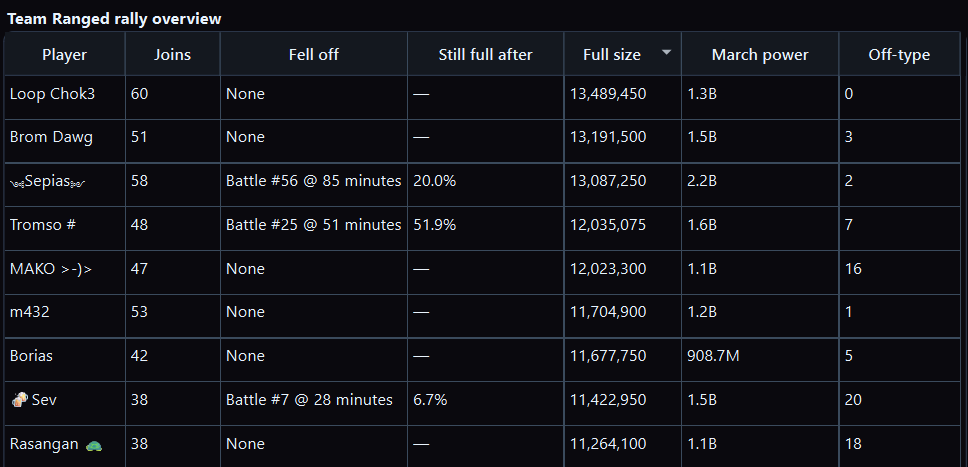
Rows and columns over the current focus: people, troop types, tiers, layers, fights, measures. You choose the grain and the splits. This is the computation. Copy button in the Analyst; no library-wide CSV. What can go in the cells: numbers and shapes. What the columns mean for the ask: the reading.
Comparison
Two (or more) slices of the same focus, or the same measure under two filters: type vs type, full vs dust, main vs rein, early vs late. Say the measure if you care. Effectiveness is one lens; it is not the only one.
Breakdown
The same question, grouped: by player, by incoming type, by keep, by tier band. Often a follow-up after a table you already like (“split that by incoming troop type”).
Single-fight close read
Still allowed — after the focus has made that fight the row you care about. Matchup, layers, exchange, what the scoreboard hid. One report is not the default unit of the product; it is a legitimate step 4.
Coverage note
When the slice is sparse, a good answer says so and what reports would change it. That is an answer, not a failure.
How to use this page
When you write a recipe, say which form you wanted (table, sequence, comparison) and what the focus was. Do not title the recipe after a denser default view unless the interesting part is what you asked after that reporting.
What to ask (the large map): question atlas. Why those asks used to be fantasies: labor and scale.
Summary, sequence, table, comparison — all from one imported event.
These are forms, not a ribbon of buttons. They only appear after the battlefield’s reports are a structured library. If you want a keep sequence one turn and a team table the next, download Tactica, Fast Read the favorited mailbox, then name the focus and the form.
New customers can start with a 7-day trial. Plans start at $14.99/month with full feature access.